

Threat of $200 oil: Tehran escalates attacks and sets energy markets on fire
Iran has reportedly set fire to two tankers in Iraqi waters, escalating attacks on oil and transport facilities across the Middle East, while warning that the world should prepare for oil prices at $200 per barrel. This warning stands in direct contrast to US President Donald Trump's claim that the United States has already won the war. The war, which broke out with joint US and Israeli airstrikes against Iran nearly two weeks ago, has so far caused approximately 2,000 deaths and plunged global energy markets and international transport into chaos.
The conflict has expanded across the Middle East and has led to plans for the largest release of strategic oil reserves in history, aimed at containing one of the greatest energy shocks since the 1970s. The United Nations Children's Fund (UNICEF) announced that more than 1,100 minors have been killed or injured since the start of the hostilities. At a campaign-style rally in Kentucky, ahead of the November midterm elections where the Republican party appears to be lagging significantly, Donald Trump stated that the United States has won the war but does not wish to return to conflict every two years. "We don't want to leave early, right?" he said on Wednesday. "We have to finish the job."
Surging oil prices
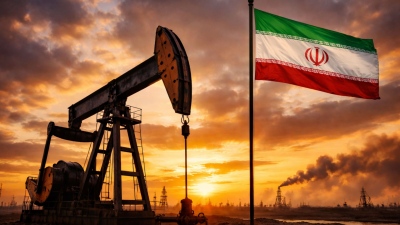
Oil prices, which earlier in the week had surged near $120 a barrel before retreating, rose again by nearly 10% in Asian markets today, Thursday, surpassing $100 per barrel again due to renewed fears of supply disruptions. Tehran has made it clear that it intends to cause a prolonged economic shock. A spokesperson for Iran's military command stated on Wednesday, addressing the US: "Prepare for $200-a-barrel oil, because the price of oil depends on the security of the region, which you destabilized."
Coordinated attack
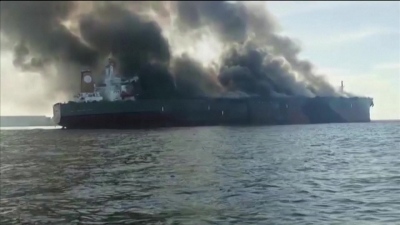
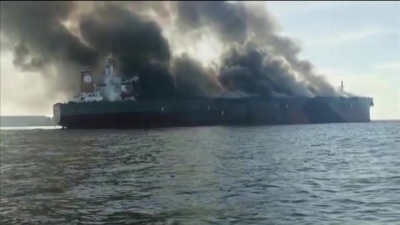
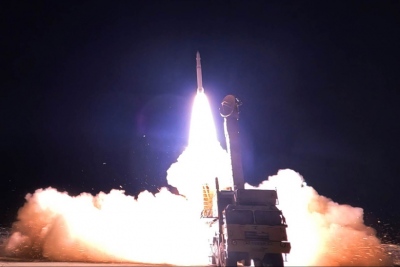
According to port officials and maritime security companies, Iranian speedboats loaded with explosives appear to have attacked two tankers in Iraqi waters, causing a fire and the death of one crew member. At the same time, projectiles hit three commercial ships in Persian Gulf waters. "This appears to be a direct and dynamic response by Iran to the International Energy Agency's announcement of a mass release of strategic reserves, aimed at curbing the price spike," said IG analyst Tony Sycamore.
The IEA, which includes major oil-consuming countries, recommended on Wednesday the release of 400 million barrels from global strategic reserves to limit one of the biggest energy shocks since the 1970s—the largest intervention of its kind in history. Donald Trump stated that this decision "will significantly reduce oil prices as we eliminate this threat to America and the world." US Energy Secretary Chris Wright reported that Donald Trump has approved the release of 172 million barrels from the United States Strategic Reserves, with shipments starting next week. Meanwhile, Iran reportedly targeted fuel tanks at facilities in Muharraq, Bahrain, according to the country's Ministry of Interior, while drones hit oil storage facilities at the port of Salalah in Oman, as reported by the state news agency.
Strait of Hormuz blocked
Today, Thursday, March 12, 2026, another commercial maritime authority announced that a container ship was hit by an unknown projectile near the United Arab Emirates. So far, there are no indications that ships can sail safely through the Straits of Hormuz, the maritime corridor along the Iranian coast that is now blocked and through which about one-fifth of the global oil supply passes.
On Wednesday, a spokesperson for the Iranian military stated that the Straits of Hormuz are "unquestionably" under Iran's control. Meanwhile, the G7 countries—the United States, Canada, Japan, Italy, Britain, Germany, and France—agreed to consider the possibility of escorting ships to ensure free navigation in the Persian Gulf. Donald Trump stated that US forces have destroyed 58 Iranian warships and that Iran is "almost at the end of the road." He added that the US will now examine the situation in the Straits of Hormuz "very seriously," stating: "The straits are in very good condition. We have neutralized all their ships. They have some missiles, but not many." Earlier, Donald Trump had stated that ships "should" pass through the straits; however, sources reported that Iran has placed about a dozen mines in the channel, a fact that further complicates the blockade.
www.bankingnews.gr


Σχόλια αναγνωστών